Whether You're Buying in the Town of Truro or in Colchester County: Understanding Closing CostsWhether you are looking to settle down in Onslow or planning to buy a property in the heart of Truro,
Dated: January 13 2026
Views: 273
 Whether You're Buying in the Town of Truro or in Colchester County: Understanding Closing Costs
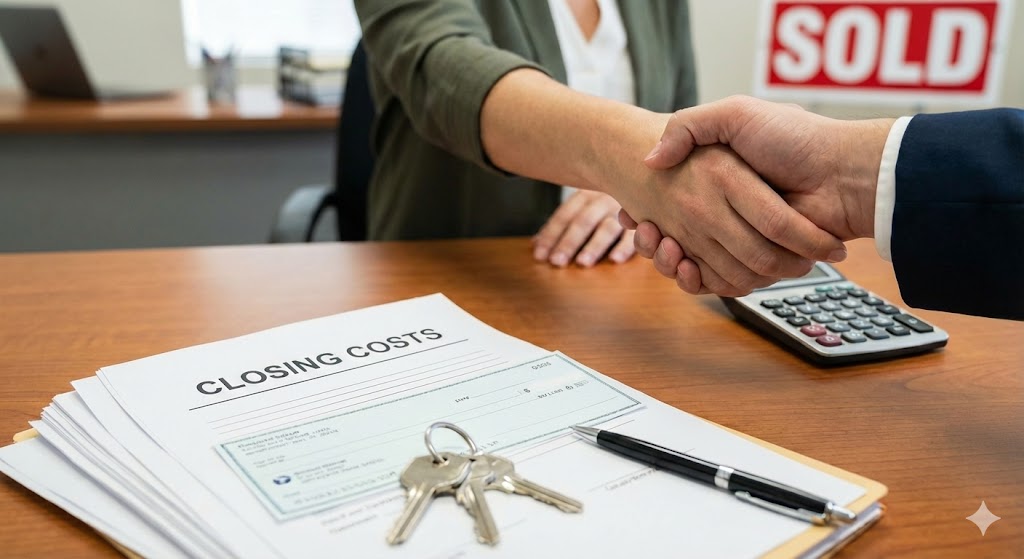
Whether you are looking to settle down in Onslow or planning to buy a property in the heart of Truro, understanding closing costs is essential. In Nova Scotia, these "hidden" costs can catch you off guard if you only focus on the sticker price of the home.
At the Hubtown Team, we want our clients to feel confident from the first viewing to the moment they turn the key. Here is a breakdown of what you can expect to pay when closing a deal in Truro and Colchester County.
In Nova Scotia, it is a good rule of thumb to set aside 2% to 3% of the purchase price to cover closing costs (excluding the downpayment). Here is where that money goes:
This is the big one. In the Municipality of Colchester and the Town of Truro, the Deed Transfer Tax is currently 1.5% of the purchase price. As an example: a purchase of a $300,000 home would give you a Deed Transfer Tax of $4500 paid on closing.
You’ll need a Nova Scotia lawyer to handle the closing.
Most lenders require title insurance to protect against title defects or survey issues. It’s a one-time fee, usually around $300 and can increase in houses over $500,000. If there is a location certificate available, you may be able to use that in place of title insurance. This would depend on a number of factors, including how old the certificate is and what the lender has to say about it. You could also have a surveyor do a new location certificate for you. This would be the best case, since it would be current and you would have a contractual relationship with the surveyor. The importance of the contractual relationship is in the case of any errors; you would have possible recourse with the surveyor. A location certificate varies in price depending on the lot but typically can be over $1000. Because of the difference in price, Buyer’s typically choose title insurance over a new location certificate. These will be discussions you have with your lawyer and realtor to confirm these details.
Adjustments ensure home expenses are fairly divided, so each party is paying their fair share! The lawyer will calculate these and add them to your closing costs.
Every house is different and may have no fuel or leased equipment, which would reduce your closing costs. So, every offer you write, you should be having a conversation on closing costs with your realtor.
While paid before closing, these are essential costs in a real estate transaction to make sure you are comfortable moving forward with the purchase. Typically, any tests or inspections are at the Buyer’s expense.
· A standard inspection runs around $500 plus tax. These can vary depending on your inspector and style of property (multi-unit could be more expensive). Some inspectors may have other services that add to their costs. It is always a good idea to check with them to see what services they provide and how much they cost. For example, you may want to add a sewer line inspection to the list (approx. $250).
· If the property is rural, you will likely want to test the well water or do a septic inspection (which can be a bit more expensive than a sewer line inspection (approx. $350). The cost of a water test depends on what you test for. Locally, Dalhousie AC takes samples, and they can provide a full price list. At minimum, most lenders will require a bacteria test which costs $27.30 for a present/absent test. Other common tests are for minerals, lead, uranium and arsenic. A common mineral package costs $89 and a 3-day rush on lead, uranium and arsenic currently costs $155.50. These prices include HST. Always double check pricing, as it can change.
There are other tests you can do if you are concerned about the quantity of the water on the property. There are companies that will look into this.
· There can be other items at a property that you may want to investigate or get quotes for. Sometimes these professionals may charge for time to visit the property and do the quote. For example, if there was an electrical issue pointed out by your inspector, you may want to have an electrician come take a look to see how much it would cost to repair.
In Nova Scotia, your down payment is often the most significant upfront factor in determining your long-term mortgage costs. Typically, the minimum requirement is 5% down and sometimes more as the price of the house increases. Anything less than a 20% down payment is considered a "high-ratio" mortgage and requires mortgage insurance. This insurance protects the lender, though the premium is passed on to you. These fees are tiered based on your down payment amount: a 5% down payment typically carries a higher premium and drops as the down payment is increased. Once you hit a 20% down payment the premium disappears, because the mortgage is no longer insured.
Buying a home just became a little more accessible in Nova Scotia. The provincial government recently launched the First-time Homebuyers Program, a pilot project designed to lower the upfront cash needed to get into the market.
The Big Change: Lower Down Payment
The most significant feature of this program is the reduction of the minimum down payment.
Eligibility Requirements
To qualify for this pilot program, buyers must meet the following criteria:
Purchase Price Caps
The program is intended for modest to mid-market homes, so there are limits on the purchase price:
Key Perks for Closing Costs
How to Apply
This program is delivered through a partnership with Atlantic Central and participating Credit Unions across the province. Interested buyers should contact their local credit union to start the pre-approval process under this specific pilot.
**Disclaimer: These figures are estimates based on current 2026 market standards. Closing costs can vary significantly based on the property type, your residency status, and the specific terms of your Agreement of Purchase and Sale. We always recommend checking service professionals pricing and having discussions with your realtor, so you know what to expect. If you would like to chat about closing costs, you can always email the Hubtown Team at info@hubtownhomes.com**

Jason, who hails from the small community of Bass River, married the love of his life Tessa and headed off on their greatest adventure … teaching English as a second language in Japan. Once their â€....
Whether You're Buying in the Town of Truro or in Colchester County: Understanding Closing CostsWhether you are looking to settle down in Onslow or planning to buy a property in the heart of Truro,
Whether You're Buying in Colchester County or in the Town of Truro: Understanding Closing CostsWhether you are looking to settle down in Onslow or planning to buy a property in the heart of Truro,
 Information should be deemed reliable but not guaranteed, all representations are approximate, and individual verification is recommended. Copyright ©2017 All rights reserved.
The trademarks REALTOR®, REALTORS® and the REALTOR® logo are controlled by The Canadian Real Estate Association (CREA) and identify real estate professionals who are members of CREA. The trademarks MLS®, Multiple Listing Service® and the associated logos are owned by CREA and identify the quality of services
provided by real estate professionals who are members of CREA. Used under license.
Show More...
Information should be deemed reliable but not guaranteed, all representations are approximate, and individual verification is recommended. Copyright ©2017 All rights reserved.
The trademarks REALTOR®, REALTORS® and the REALTOR® logo are controlled by The Canadian Real Estate Association (CREA) and identify real estate professionals who are members of CREA. The trademarks MLS®, Multiple Listing Service® and the associated logos are owned by CREA and identify the quality of services
provided by real estate professionals who are members of CREA. Used under license.
Show More...